Taking Early Detection Further: Breast Cancer
Breast cancer screening can save lives, but it reaches only about half of all women. Gynecologist Prof. Kerstin Rhiem discusses moving away from a one-size-fits-all approach, the benefits of 3D mammography, and the opportunity to identify genetic risks early through a digital questionnaire.
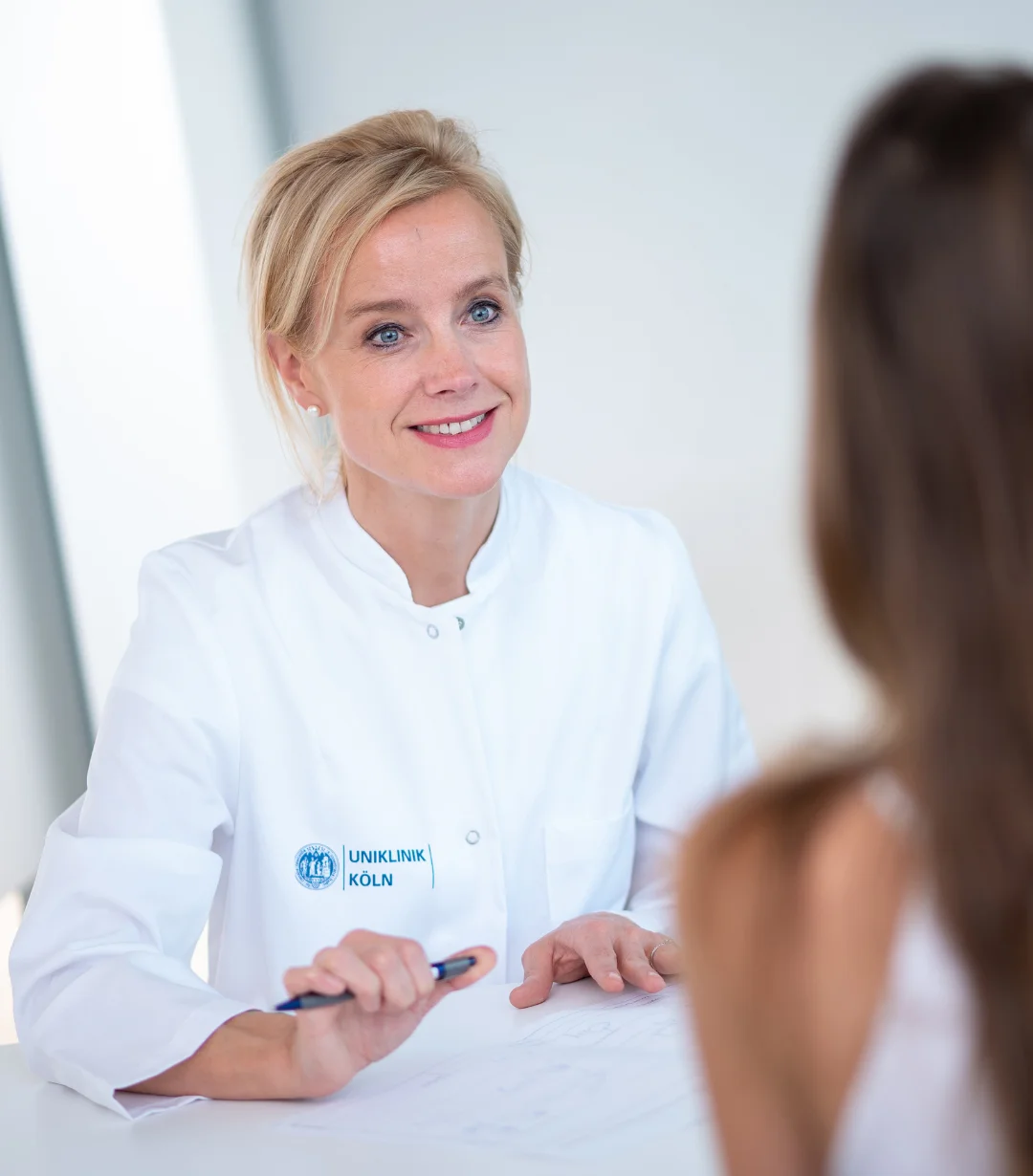
Prof. Rhiem, the German mammography screening program was evaluated just last year—what were the results?
The study, led by the University of Münster, clearly demonstrated that we have a highly effective, quality-assured breast cancer screening program in Germany. The encouraging key finding of the study was that, among women who regularly participated in the screening, early diagnosis prevented approximately one in four breast cancer deaths.
What are the strengths of the German program?
Definitely quality and process assurance: mandatory double-reading of findings by two trained specialists who must demonstrate a minimum number of examinations; nationwide coverage with certified facilities and even mobile mammography units in sparsely populated regions; and systematic invitations and cost coverage, which ensure a high degree of equal opportunity. Added to this are standardized diagnostics and comprehensive interdisciplinary evaluation of abnormal findings at certified centers, thereby preventing overdiagnosis and delays in treatment. Taken together, this already makes us a European leader.
But do you still advocate moving away from a “one-size-fits-all” approach and shifting from purely age-based screening to risk-adapted screening?
Yes, because familial/hereditary risk is the strongest risk factor for breast cancer. Affected women can often be identified simply through a standard medical history interview with a gynecologist. The challenge is that some of these women develop the disease even before screening begins at age 50. Women with a family history or hereditary risk of breast cancer are therefore offered an MRI-based, intensified early detection program at specialized centers for familial breast and ovarian cancer.
An integrated interface between the nationwide mammography screening program and the specialized centers would significantly improve early detection for women with a family history of the disease. By using a digital, standardized questionnaire, personal and family medical history could be collected in a structured manner directly during the invitation process.
Are there, in addition to the well-known high-risk genes BRCA1 and BRCA2, other factors that determine the genetic risk for breast cancer?
Exactly. The so-called polygenic risk score also plays an important role. These are genetic variants distributed across the entire genome that, taken together, have a cumulative effect that can either increase or decrease an individual’s risk compared to the population average.
The average lifetime risk of breast cancer for women in Germany is about 12 percent. By incorporating the polygenic risk score, this range can be expanded from 3 to over 30 percent. On this basis, a study on risk-adapted screening could be designed. In the long term, this could enable us to establish an improved—and presumably also cost-optimized—breast cancer screening program that will further reduce breast cancer mortality in Germany.
Currently, we’re primarily reaching women who are better off socially and educationally. To reach all population groups, we need to lower the barriers to participation
Prof. Dr. Kerstin Rhiem is the director of the Clinical Center for Familial Breast and Ovarian Cancer at the University Hospital of Cologne.
But these genetic risks aren’t currently being used for risk stratification, are they?
No. At the moment, we’re developing and testing suitable communication strategies as part of the MyRisk study, which is funded by German Cancer Aid. The goal is to educate women—in accordance with the Genetic Diagnostics Act—about the significance of the polygenic risk score and to enable them to make an informed decision for or against such a test.
Together with other influencing factors—such as lifestyle factors like alcohol consumption and body weight, the use of hormone replacement therapy, and breast density—this results in a comprehensive, personalized risk profile. Our goal is to provide women—for example, via a digital application—with a tailored risk prediction so they can adjust their preventive measures and health behaviors accordingly.
Where do you see further room for improvement?
There are two key areas we need to address. First, we must reduce the rate of false-positive findings to avoid unnecessary biopsies. When women are told that their mammogram results are abnormal, it places an enormous emotional burden on them. It often takes days before the results of the tissue examination are available. This period of uncertainty is one of the most emotionally difficult times for those affected!
Dense breast tissue often causes tissue overlap in conventional 2D mammography, leading to unclear findings that require follow-up testing. With 3D mammography—known as tomosynthesis—such effects can be resolved much more effectively. While this technique is already routinely used today for targeted evaluation of abnormal findings, its future use in initial screening could significantly reduce the rate of false-positive results from the outset. In addition, the supplementary use of AI systems in image interpretation suggests that suspicious cases can be filtered even more precisely in the future, thereby avoiding unnecessary biopsies.
And the second point?
We need to increase participation rates! The effectiveness of any screening program stands or falls with participation. And despite all the access options available, we’re still only just above 50 percent. Currently, we’re primarily reaching women who are better off socially and educationally. To reach all population groups, we need to lower the barriers to participation: Information tailored to different language proficiency levels, multilingual services, and greater cultural sensitivity could help here. Furthermore, we should take advantage of people’s high digital literacy and offer services such as scheduling appointments via a smartphone app.
It’s also very important to involve primary care providers: They should receive comprehensive training to clearly communicate the benefits and risks of screening. This way, every doctor should be able to quickly and precisely address concerns—such as those regarding radiation risk, which is negligible at the screening age.
In a nutshell: What is your vision for the future of breast cancer screening?
I envision a tailored, individualized prevention pathway for all women—free of barriers to access—that identifies family history early on and seamlessly integrates all relevant factors, such as polygenic risk, lifestyle factors, and individual breast density, into a personalized risk profile!
Prof. Dr. Kerstin Rhiem is the director of the Clinical Center for Familial Breast and Ovarian Cancer at the University Hospital of Cologne.
Interview: Dr. Sibylle Kohlstädt, Press Spokesperson for the DKFZ